
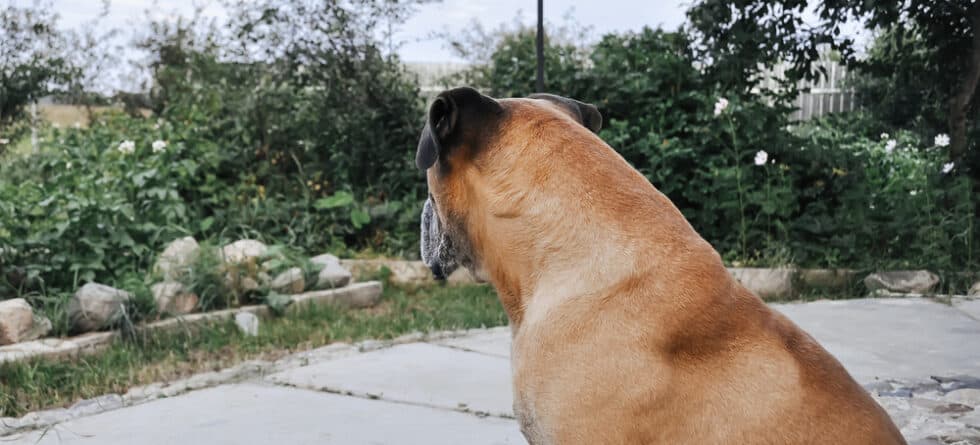
Boxers are not calm dogs by nature, especially when they are young. They are playful, energetic, and people-focused, with a strong drive to move and interact. Many Boxers become calmer adults with the right training and daily outlets, but they usually stay more high-spirited than truly laid-back breeds.
Usual Boxer temperament
Boxers were bred as working guard and hunting dogs, then became family companions. That mix shows in their personality.
- High energy – they like to run, play, and stay busy.
- Goofy and social – they want attention and often act like big puppies.
- Alert – they notice people and sounds quickly.
- Affectionate – they relax best when close to their people.
When Boxers are most calm
A boxer calmness depends a lot on age and routine.
Puppies & teenagers
- Usually very bouncy, mouthy, and excitable.
- Impulse control is still developing.
- Expect high energy until at least 2 years old.
Adults
- Many Boxers settle into a calmer rhythm between 2 and 4 years old.
- They still need daily activity to stay balanced.
Seniors
- Older Boxers often become noticeably calmer.
- They may prefer shorter walks and more rest time.
What helps a Boxer stay calm
Boxers calm down best when their energy has a safe outlet, and their brain stays engaged.
-
- Daily exercise – at least 60 to 90 minutes for most healthy adults.
- Play with structure – fetch, tug, or flirt pole sessions that end before they get over-hyped.
- Training – short sessions build focus and self-control.
- Predictable routine – walk, eat, rest, and play at steady times.
- Calm rewards – praise or treats when they settle on their own.
When Boxers may seem less calm
If a Boxer is not getting enough outlets, calm behavior is hard to reach.
- Under-exercise – leads to zoomies, jumping, and barking.
- Boredom – can cause chewing or pacing.
- Overstimulation – rough play or noisy environments can keep them revved up.