
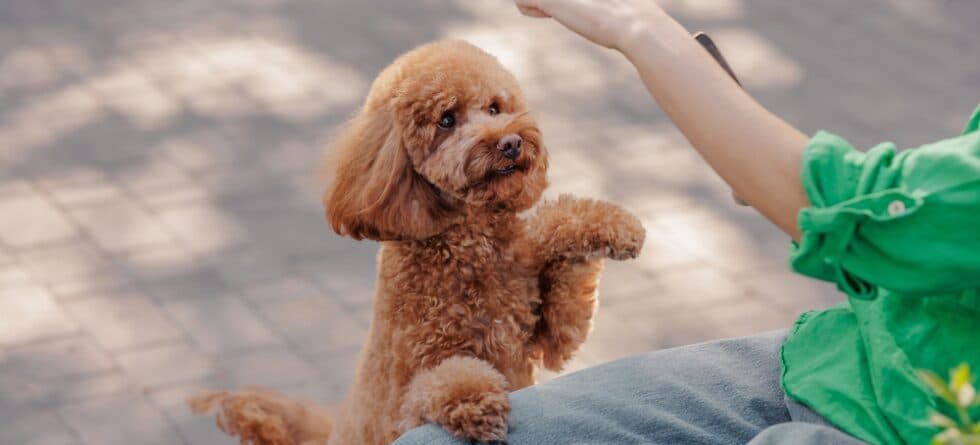
Yes, Poodles are usually excellent house dogs. They are smart, people-focused, and adaptable to indoor life when their exercise, grooming, and mental needs are met. All three sizes – Toy, Miniature, and Standard – can thrive in a home setting, but they do best with routine and active engagement from their owners.
Why Poodles make great house dogs
They are highly trainable
Poodles are one of the smartest breeds, so they learn house rules quickly.
- They pick up potty training, boundaries, and commands fast.
- They respond well to positive, reward-based training.
- They often enjoy learning, which helps prevent behavior problems.
They bond closely with people
Poodles were bred to work alongside humans. Indoors, that turns into strong companionship.
- They like being near family members.
- They often prefer indoor comfort over independent roaming.
- They usually adjust well to household routines.
Low shedding is a big indoor advantage
Poodles shed very little compared with most breeds, which keeps homes cleaner.
- Less loose hair on floors and furniture.
- Many allergy-sensitive owners find them easier to live with.
They adapt to different home sizes
Size variety makes them flexible for many lifestyles.
- Toy and Miniature Poodles fit into apartments easily.
- Standard Poodles do well in houses but still live happily indoors.
- All sizes can meet exercise needs with daily walks and play.
Challenges to know about indoors
They need daily mental stimulation
A bored Poodle may bark, pace, or get destructive even inside a comfortable home.
- Short training sessions help a lot.
- Puzzle toys and scent games keep them calm.
- They like having a job, even a small one.
Grooming is not optional
Poodles have hair that grows continuously. Indoor life does not reduce grooming needs.
- Regular brushing prevents mats.
- Most need professional grooming every 4 to 8 weeks.
- Dirty or tangled coats can cause skin irritation indoors.
Some can be alert barkers
Poodles are observant and may bark at sounds or movement, especially Toys and Minis.
- Early socialization reduces nervous barking.
- Teaching a quiet cue helps shape watchdog habits.
They can be sensitive to harsh handling
Poodles are emotionally tuned in and may shut down with yelling or rough corrections.
- They do best with calm, consistent guidance.
- Confidence-building training keeps them steady indoors.
What a Poodle needs to thrive as a house dog
- Daily exercise – walks plus some play or training, adjusted for size and age.
- Brain work – sniffing, puzzles, and short lessons.
- Grooming routine – brushing several times a week and consistent trims.
- Socialization – gentle exposure to people, dogs, and household sounds.
- Comfortable rest space – a bed or crate area where they can relax undisturbed.
Poodles are very good house dogs for most homes. They are clean, low-shedding, affectionate, and easy to train, with a size option for almost any living space. Their main indoor requirements are steady mental stimulation and regular grooming. Meet those needs, and a Poodle is usually a joyful, well-mannered companion indoors.