
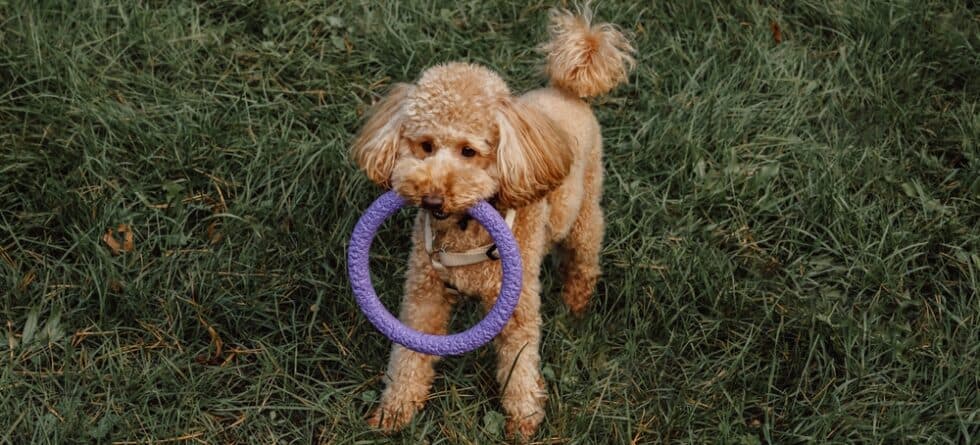
Poodles usually bite more during puppyhood, especially when they are teething, playing, or feeling overstimulated. At that stage, biting often means mouthing, nipping, or grabbing with the mouth rather than true aggression. Puppies use their mouth to explore the world, and Poodles are no different.
This behavior often starts to improve as the puppy grows, learns better self-control, and gets clear training. The biting does not usually stop on one exact birthday. It tends to fade little by little as the dog matures and learns what is acceptable.
Most Poodles Improve A Lot During The First Year
Teething Often Makes Biting Worse
Many Poodles bite the most during the teething stage. This is often the period when chewing, mouthing, and nipping feel especially strong. A puppy may bite hands, clothes, or toys more often simply because the mouth feels uncomfortable and the puppy is trying to relieve that feeling.
Better Control Often Comes With Age
As the puppy grows and finishes teething, many Poodles start biting less. By the time they move further into adolescence, many have already improved a lot if they have had steady training and clear limits.
Training Matters More Than Age Alone
Some Poodles Stop Earlier Than Others
One Poodle may stop biting fairly quickly, while another may keep mouthing longer because of excitement, poor impulse control, or lack of training. Age helps, but training plays a huge part in how fast the behavior fades.
Without Guidance The Habit Can Last Longer
If a Poodle keeps getting attention for biting, has too much rough play, or is never redirected to better behavior, the habit may continue longer than it should. A dog usually improves faster when it is taught what to chew and how to play gently.
Why Some Older Poodles Still Bite Or Mouth
Excitement Can Keep The Habit Going
Some young Poodles keep mouthing when they get overexcited. This can happen during play, greetings, or busy moments in the house. The dog may not be trying to hurt anyone. It may simply still be learning self-control.
Stress Or Frustration Can Also Cause It
If an older Poodle is still biting, the reason may be stress, frustration, fear, or poor coping habits rather than normal puppy teething. That kind of biting should be taken more seriously than simple puppy mouthing.
How To Help A Poodle Stop Biting
Redirect To Toys & Chews
If your Poodle starts biting hands or clothes, redirect the dog to a proper toy or chew. This helps teach what is okay to bite and what is not. Puppies often need many reminders before the lesson becomes a habit.
Stop Play When Biting Starts
If biting happens during play, stop the fun right away for a moment. This teaches your Poodle that biting makes attention and play stop. Calm repetition often works much better than anger.
Reward Gentle Behavior
Praise your Poodle when it plays gently, licks instead of bites, or settles calmly. Dogs often learn faster when they clearly see which behavior gets a good result.