
Best Dog Breed for Hiking: Top Picks for Trail-Ready Adventures in Frisco
By Puppy Dreams Editorial Team · June 10, 2026

Labrador Retrievers, Golden Retrievers, Australian Shepherds, Australian Cattle Dogs, and Siberian Huskies are the dog breeds that hold up best on real hikes, athletic, high-stamina dogs with the physical build and temperament to cover serious miles without falling apart on you. Around Frisco, where most weekend hiking means places like Arbor Hills Nature Preserve or the trail systems up at Lake Ray Roberts, Labs and Goldens tend to be the sweet spot: enough endurance to go the distance, easy enough to handle when the trail gets crowded with families and cyclists. The breed you start with shapes every outing you'll ever take together, so it's worth getting that match right.
Key Takeaways
- Not all dog breeds are built for hiking; stamina, joint health, temperament, and paw durability determine true trail suitability.
- Siberian Huskies, Labrador Retrievers, and Australian Cattle Dogs are top picks for demanding, high-mileage trails.
- Golden Retrievers and Australian Shepherds are excellent choices for family hikes and active lifestyle hikers.
- Brachycephalic breeds like Bulldogs and Pugs face real breathing limitations that make strenuous trail exercise risky.
- Puppies should not hike demanding trails until growth plates close, typically at 12 to 18 months for medium and large breeds.
- Proper trail prep includes a vet check, gradual endurance building, and mastering recall and trail commands before heading out.
- Offer your dog water every 15 to 20 minutes on warm days and watch for heavy panting, slowing pace, or reluctance to continue.
What Makes a Great Hiking Dog? The Traits That Matter on the Trail
Some dogs are built for the trail. Others just think they are, until mile three when they're panting in the shade and you're standing there wondering how you're going to carry a 60-pound Lab back to the parking lot.
Breed matters more than most people expect. You can train recall and leash manners. You cannot train a dog out of a bad hip structure, or into a respiratory system that handles Texas heat in July. If your weekends look like Arbor Hills on Saturday mornings or a long day up at Lake Ray Roberts, you want a dog whose body is actually designed for that kind of work.
Five things tell you whether a breed is going to be a real trail partner or a liability once the mileage adds up.
Stamina and endurance: Sporting and working breeds have cardiovascular engines built to sustain effort across distance. Plenty of other dogs run hard for a mile and completely bonk. On anything longer than a neighborhood loop, that gap stops being theoretical pretty fast.
Joint health and build: Rocky terrain and elevation change put genuine stress on hips and elbows. Athletic breeds with solid joint construction handle that load well over time. Brachycephalic dogs (bulldogs, pugs, that whole crew) don't, and no amount of conditioning changes the underlying anatomy.
Temperament and recall: A dog that checks out the moment it spots a deer or smells water isn't just frustrating. On a trail with steep drop-offs or heavy mountain bike traffic, it's a real safety problem. The best trail dogs stay tuned in to you even when everything around them is screaming for their attention. Solid recall isn't optional out there.
Adaptability to terrain and weather: Frisco trails cover a lot of ground, from groomed gravel paths to sharp caliche and root-tangled creek beds, and the heat is its own challenge. Double-coated breeds built for northern winters start struggling once June hits. Leaner, shorter-coated dogs handle the warmth noticeably better.
Paw durability: Hot limestone and jagged trail surfaces will tear up soft paws faster than you'd expect. Breeds with naturally thick, tough pads hold up mile after mile. The ones without them have you digging through your pack for gauze before you're halfway done.
No breed hits all five. But the breeds that come close are the ones still beside you on the trail five years from now, not the ones you outgrew or had to retire early. What follows covers the ones that hold up best for Frisco-area hiking.
The Power Tier: Dog Breeds Built for Long Trails
Three breeds come up every time this conversation happens: Huskies, Labs, and Australian Cattle Dogs. The reason isn't branding. It's that all three were working animals built for sustained physical output before they were ever pets, and whatever job they were bred for left a real stamp on what they can handle on the trail.
Siberian Husky
The Chukchi people didn't breed Siberian Husky puppies to sprint. They bred them to run. For hours. Across frozen ground. Day after day. Covering distances that would flatten most working dogs by lunchtime. That's the engine waiting for you at the trailhead.
On a cool morning, your Husky will be out ahead of you before you've even found your footing, nose down, tail up, already annoyed that you're moving so slowly. The thick double coat that kept their ancestors alive in Siberia still works exactly as advertised in cold weather. North Texas winters? These dogs are having the time of their lives.
Summer is a different conversation entirely. That same coat flips from asset to liability the moment August hits. Early starts aren't optional. Carry more water than you think is reasonable, build shade breaks into the route, and watch for panting that just won't quit. Manage the heat right and you've got a trail partner with more left in the tank than you. Ignore it and you've got a problem.
Best for: Cold-weather hikers who want to log real miles. If your version of a perfect trail day involves distance and temperatures that don't try to kill you, a Husky will never be the one asking to turn back.
Labrador Retriever
Here's something most people already know and keep finding out anyway: Labrador Retriever puppies are just built for this. Deep chest, strong hindquarters, a retrieving instinct that keeps them tuned in no matter what the terrain throws at them. Labs have this rare quality where they'll match your pace whether you're a first-timer on a beginner loop or someone grinding out a full backcountry day. Capable and easygoing at the same time. It's almost annoying how well-rounded they are.
The water thing is completely real, by the way. Route crosses a creek? Your Lab is already in it. Soaking wet, absolutely thrilled, no regrets. On a hot Texas hike that's not a mess to manage. That's basically a built-in cooling station.
One thing worth keeping an eye on as your Lab gets older: hip dysplasia shows up in the breed more than you'd like. Keep them at a healthy weight, build up distance gradually instead of jumping straight to long days, and stay on top of vet visits. Labs will push through discomfort to stay with you, which is genuinely sweet and also a reason to pay attention so they don't have to.
Best for: Honestly, almost any hiker at almost any level. Same dog, same happy energy, two-mile family loop or full backcountry day. You can't really go wrong.
Australian Cattle Dog
Go look up the terrain Australian Cattle Dogs were originally bred to work. Rough. Vast. Unforgiving in every direction. Australian Cattle Dog puppies descend from dogs who spent full days moving cattle across some of the most demanding land in Australia, and generations of that work didn't just fade out when they became pets.
What makes an ACD different isn't only the endurance, though the endurance is real. It's the way endurance, agility, and sharp intelligence all show up at the same time. Rocky scrambles, uneven switchbacks, sections of trail where you're hopping boulder to boulder: a Cattle Dog handles all of it with this focused, almost businesslike efficiency that's genuinely fun to watch. And they're smart enough that trail manners and recall can be trained to a very tight standard if you're willing to put in the work.
The honest thing to say about ACDs is that they are a lot of dog. An occasional weekend hike won't cut it. They need consistent physical work and mental stimulation, and when they don't get it, that energy doesn't disappear. It just becomes your problem. But if you're hiking regularly and you want a dog that treats every trail like it's exactly where they belong, an ACD will not let you down.
Best for: Experienced hikers who want a dog that keeps up without needing to be managed. Handles rough terrain well, moves efficiently, and still has plenty left when you're ready to head home.
Those three aren't the whole picture, though. A few other breeds have real trail credentials, just with different strengths and different riders.
Versatile Hikers: Three More Breeds for Every Trail Type
The power tier covers the dogs built for punishment. But most hikers don't need a dog that treats every outing like a job. These three breeds show up for a wider range of hikers: the family weekend warrior, the daily trail runner, and the one chasing winter peaks when everyone else is staying home.
Golden Retriever
There are dogs that tolerate the trail and dogs that are thrilled by it. Golden Retriever puppies grow up to be firmly in the second category. Sturdy, social, and easygoing about conditions, they're the kind of hiking companion that makes everyone around them feel like the day is going well. Hit a creek crossing and your Golden is already in it. You'll wait. You won't mind.
Where Goldens really shine is on family day hikes where the goal is enjoyment, not a personal record. They're not going to turn your casual trail into a sufferfest, and they handle beginner-friendly terrain without complaint. The one thing they will do is collect every burr, stick, and wet leaf between the parking lot and the summit. Plan for a real brush-out when you get home.
Best for: Families, new hikers, anyone who just wants a genuinely good day outside with a dog who's just as happy to be there as you are.
Australian Shepherd
An Aussie doesn't really "go for a hike." They go to work. Australian Shepherd puppies are built from herding stock, wired for sustained physical effort and constant problem-solving, and when you put them on a technical route with a handler who actually trained them, they are locked in. Responsive. Thriving. They're among the best dogs for hiking with an active lifestyle, especially once the terrain gets interesting.
But the caveat matters. A weekly trail outing won't cut it for this breed. Aussies need daily exercise, consistent training, and enough mental stimulation to keep them from getting creative at home in ways you'll regret. Match their energy and they're exceptional. Fall short and you'll know about it. Be honest with yourself before committing to one.
Best for: High-mileage hikers who want a sharp, engaged trail partner. Longer routes with real challenge are where Aussies do their best work. Flat, easy terrain tends to bore them.
Alaskan Malamute
Built to haul loaded sleds across arctic tundra for days. Also completely capable of overheating on a mild Texas morning if you're not careful. That's the Alaskan Malamute puppies situation in a nutshell, and it's worth understanding before you fall for how impressive they are.
Because they are impressive. The size, the muscle, the endurance on long backcountry routes in cold climates, it's genuinely unmatched. They can carry their own pack without strain. In the right conditions they're one of the most capable trail dogs out there. The key phrase is right conditions. If you're in a warmer region and committed to this breed, hike early, hike in cooler months, and treat summer heat as the actual health risk it is for them rather than just an inconvenience.
Best for: Winter hikers and anyone chasing serious elevation in cold conditions. This is exactly the work the Malamute was bred for, and it shows on every steep, frozen mile.
The breeds above tell you who was built for trails. What they don't tell you is whether your specific dog, right now, is actually ready for the kind of hike you're planning. Age, fitness, and anatomy all factor into that answer.
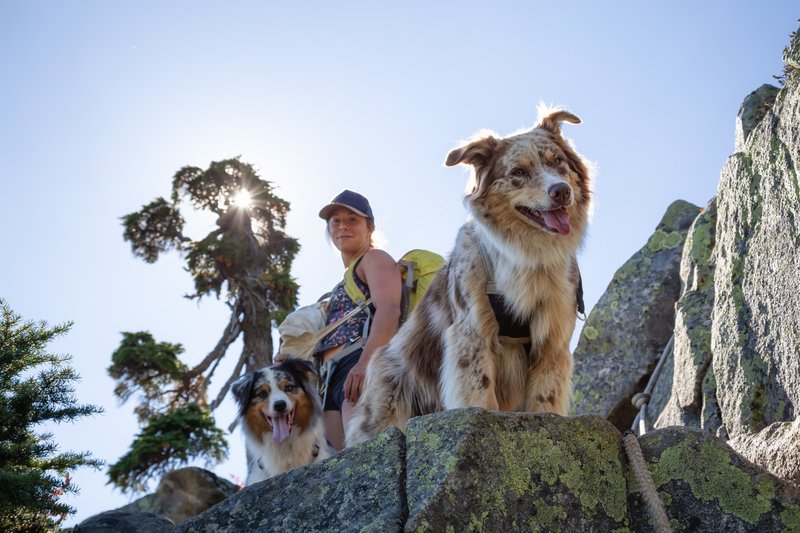
Not Every Dog Is Trail-Ready: What to Know Before You Go
Here's the honest truth: not all dogs were built for trails, and the ones that were still need the right conditions at the right time in their lives. Getting that match right matters as much as picking the right trail.
If you're hiking with your dog around Frisco, that calculation is real every time you load up the car. The Frisco Heritage Trail and Frisco Commons Park are forgiving, flat, and paved, which makes them a reasonable choice for a wider range of dogs. Push further out to Erwin Park in McKinney or Lake Ray Roberts State Park, and the terrain gets rougher, the distances get longer, and the demands on your dog go up significantly. Even Arbor Hills Nature Preserve, just south in Plano, has unpaved sections that can be hard on small frames or dogs with joint issues. North Texas summers add another layer: heat and humidity turn a manageable two-mile loop into something that needs real planning. Knowing where you're going and who you're taking matters before you leave the driveway.
Brachycephalic breeds: A Bulldog huffing along a shaded neighborhood path looks very different from that same dog two miles into a summer climb. Bulldogs, Pugs, French Bulldogs, and Boxers have shortened snouts that make hard breathing feel even harder, and heat turns a manageable situation into a dangerous one fast. If you own one of these dogs, let their breathing set the pace. Not a mileage number on an app.
Small and toy breeds: A surprising number of small dogs are genuinely high-energy and want to be out there. But wanting it and being built for it aren't always the same thing. Short legs work harder to cover the same ground, rocky terrain is punishing on small frames, and steep grades that feel moderate to you can feel relentless to them. Well-maintained, moderate paths suit these dogs well. Watch how they're moving and let that guide you.
Puppies on the trail: Growth plates close later than most people expect. For medium and large breeds, waiting until 12 to 18 months before sustained trail hiking is the standard recommendation, and the AKC guidelines are clear that repeated high-impact activity before that point can cause permanent joint damage. Short nature walks? Completely fine. A demanding mountain trail? That can wait.
Senior dogs: Ten-year-olds still light up at the sight of a leash. Age doesn't pull a dog off the trail, it just changes how you run the day. Shorter miles, slower pace, more stops with the water bowl. You're also watching differently now, keeping an eye on the breathing, catching a subtle hitch in the stride, noticing when your dog falls behind instead of leading. Starting a regular trail routine with an older dog? A vet visit first is just smart, especially with any hip or joint history. It's hiking at a different pace. Still one of the better ways to spend a morning.
Hip dysplasia in large breeds: Labs and Goldens are great on trail and also show up more than most breeds in hip dysplasia diagnoses. Not a reason to leave them home. A reason to get screened before trail hiking becomes a regular habit. Find a problem early and you can manage it. Find it at mile eight when your dog can barely walk back to the car and you're running out of options.
None of this automatically rules a dog out. It's really about being honest with yourself about where your dog is right now, not where you wish they were or where they used to be. Work with that, and you'll both have a better time out there.
Knowing your dog's limits is only half of it. The other half is showing up prepared: the right gear, enough water for both of you, and a basic handle on how to behave out there around other hikers and dogs.
Getting Your Dog Trail-Ready
Here's the thing about trail dogs: enthusiasm isn't the same as readiness. A dog who loses their mind at the sight of a leash and boots isn't necessarily a dog who can handle six miles on rocky terrain in July heat. Closing that gap before you hit the trailhead makes every outing better.
Before you pull up a single trail map, get a vet visit on the calendar. Especially if you have a bigger breed, a senior dog, or one whose idea of cardio is a lap around the backyard before nap time. Joint problems, weight issues, heart conditions: none of these tend to announce themselves during a casual walk around the block. They announce themselves at mile four, uphill, when you're nowhere near the car. A quick checkup now is a lot cheaper than a bad situation in the backcountry.
Build endurance gradually: Flat and short first. Then add distance. Then elevation. Over several weeks, not several days. Paws toughen, joints adapt, cardio catches up. But only if you give those systems time. Don't let a six-mile ridge hike be how you find out your dog wasn't ready.
Master the basics before the trailhead: Recall, "leave it," stay. These aren't optional out there. Wildlife happens. Strangers happen. Off-leash dogs whose owners say "he's friendly!" happen. Your dog needs to listen to you when things get interesting, not just in the living room when nothing else is going on.
Pack the right gear for your dog:
- Collapsible water bowl: Barely takes up any space and you will absolutely use it every single time
- Enough water: Offer it every 15 to 20 minutes on warm days. Dogs burn through their reserves faster than most people expect.
- Dog first aid kit: Gauze, antiseptic wipes, tweezers, any regular meds. Hope you never crack it open.
- Harness: Better control for you, better stability for your dog on rocky or uneven ground
Watch for heat and overexertion: Dogs cool down through panting and a little sweating through their paws. That's it. It's not a great system for hot days and hard climbs. PetMD's guide on hiking with dogs safely flags heavy panting, a slowing pace, and shade-seeking as early signs your dog needs water and a break right now. Take those signs seriously before they get worse.
Post-hike care: Before your dog sprawls out on the couch, do a quick once-over. Lift each paw and check the pads. Cracks, raw spots, small cuts from gravel: easy to miss until they're not. Then go slowly through the coat with your hands. Ticks are small and they pick good hiding spots. Behind the ears, in the armpits, between the toes. Check twice.
Do the prep right and you stop worrying about whether the trail will go badly. It just becomes the thing you do on weekends. A few common questions on how to get started are below.
Frequently Asked Questions
What is the best dog breed for hiking long distances?
Siberian Huskies, Alaskan Malamutes, and Australian Cattle Dogs are the names that come up over and over for a reason. Stamina, work drive, heat and cold tolerance. They were literally bred for exactly this. One caveat worth mentioning if you're in North Texas: a Husky in July heat is a completely different situation than a Labrador or Cattle Dog on that same trail. Climate shapes the answer a lot more than people expect.
Can any dog go hiking?
Most healthy adult dogs can, yeah. A lot of breeds handle moderate trails just fine with a little conditioning beforehand. But there are two groups where you really need to pump the brakes. Brachycephalic dogs (Bulldogs, Pugs, French Bulldogs) have compressed airways, and sustained hard exercise can cross from uncomfortable into actually dangerous pretty quickly for them. Puppies are the other one people underestimate. Growth plates need to fully close before you start putting real trail miles on a young dog, and depending on the breed, that can take anywhere from 12 to 18 months. Push it too early and you're looking at joint problems that can follow them for life. Not worth it.
How do I know if my dog is too tired to keep hiking?
Panting that won't slow down even after a decent rest is the big one. Falling behind, dragging their feet, not wanting to move, those are all signs. Any limping at all means you stop right there. Find shade, get water in them, and give it real time before you decide whether to keep going or turn back. Turning back when you're not sure is always the right call. The trail will be there next weekend.
When can I start hiking with my puppy?
Short neighborhood walks? Start those early. They're great for socialization and leash manners and they're low-impact enough that you're not stressing developing joints. Actual trail hiking is a different question. For most medium and large breeds, you're looking at waiting until around 12 to 18 months for the growth plates to close. Smaller breeds often get there faster. Your vet can give you a much more specific answer based on your dog's breed and size, and it's worth asking before you hit the trails.
Where can I hike with my dog near Frisco and Dallas?
Honestly, the DFW area is better for this than most people realize. Arbor Hills Nature Preserve in Plano is probably the most popular local option: a good mix of paved and unpaved paths, well-maintained, and always full of dogs. If yours has energy to burn and you want something with more grit, Erwin Park in McKinney is great for that. For an easy, low-key outing the Frisco Heritage Trail is flat and paved and works for dogs at basically any fitness level. When you're ready for a bigger day out, Lake Ray Roberts State Park in Pilot Point and Lake Lewisville both have longer trails with real terrain variety and waterfront access that dogs go absolutely nuts for.
Trail dogs have a way of making you realize how good a Saturday can actually get. Pick a breed that fits your trails, your schedule, and the kind of mileage you actually do, not the kind you hope to do someday, and the hiking gets better every single year. Picking the right breed comes down to knowing your trails, being honest about your lifestyle, and finding a dog whose nature fits the one you want to live.
Puppy Dreams carries over 140 breeds, including a lot of the trail-ready picks covered here. Every puppy in the store comes from a USDA-licensed source, arrives health-checked, and is backed by Puppy for Life coverage because the commitment to their health doesn't end at the door.
If you're in Frisco, come by the store and meet a few of them. The best hiking partners aren't found on a list. They're the ones that look up at you the moment you walk in, and you just know.