
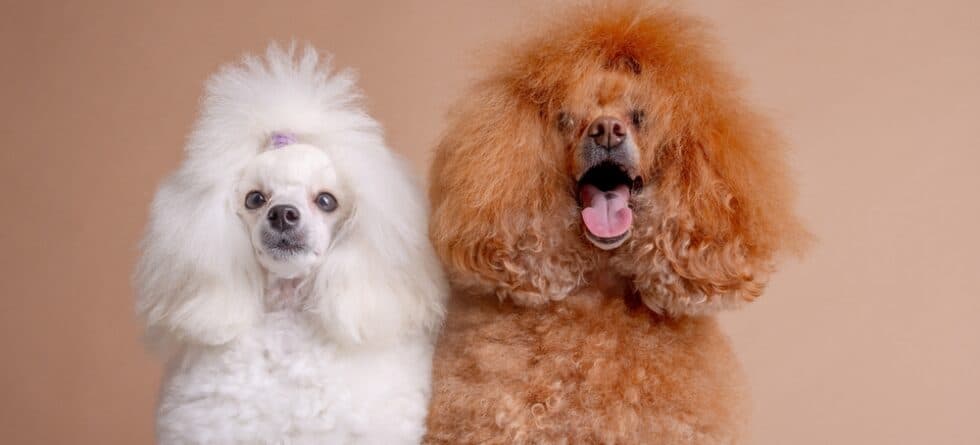
Poodles give birth through a natural process called whelping, which is similar to that of other dog breeds. The experience can vary slightly depending on the Poodle’s size, toy, miniature, or standard, but the overall stages remain the same. Healthy Poodles usually handle birth well, but preparation and monitoring help ensure a safe delivery for both the mother and puppies.
Whelping begins after a typical pregnancy of about 63 days, though it can range from 58 to 68 days. As labor approaches, the mother shows clear physical and behavioral changes that indicate puppies will arrive soon.
Signs a Poodle Is Going Into Labor
In the days and hours before giving birth, a Poodle displays noticeable signs as her body prepares for delivery.
- Nesting behavior, such as digging blankets or seeking a quiet area
- Loss of appetite or vomiting
- Restlessness, pacing, or panting
- Drop in body temperature below 99°F
- Clear vaginal discharge as labor begins
These changes often occur 12 to 24 hours before puppies arrive.
The Three Stages of Labor in Poodles
Poodles go through three main stages during the birth process. Understanding each stage helps owners know what to expect.
Stage One – Early Labor
During early labor, the cervix expands and contractions begin, but no puppies appear yet.
- Lasts 6 to 12 hours for first-time mothers
- Heavy panting and restlessness
- Shivering or hiding behavior
This stage ends when strong contractions begin pushing the first puppy toward the birth canal.
Stage Two – Delivery of Puppies
This is the active birthing stage, where puppies are delivered one at a time.
- Each puppy may take 20 to 60 minutes
- Poodles may have anywhere from 1 to 10 puppies, depending on their size
- The mother breaks the sac and cleans each puppy
- Puppies are usually born head first or feet first, both normal
If more than two hours pass between puppies, a vet should be contacted.
Stage Three – Delivery of Placentas
The placenta follows each puppy. The mother may eat them, which is normal but not necessary.
- One placenta per puppy
- Important to ensure none remain inside
Retained placentas can cause infection, so monitoring is important.
During & After Birth Behavior
After each puppy is born, the mother instinctively performs important tasks.
- Cleans the puppy by licking to stimulate breathing
- Bites the umbilical cord
- Moves puppies toward her for nursing
- Stays calm but focused on her litter
Owners should avoid interfering unless the mother struggles or the puppy is not breathing.
How Owners Can Help Safely
Most Poodles can give birth on their own, but providing support makes the process smoother.
- Create a warm, quiet whelping area
- Have clean towels ready for emergencies
- Keep the mother hydrated and calm
- Contact a vet if labor slows or complications occur
Professional guidance is especially important for toy Poodles, as smaller breeds are more prone to birthing difficulties.
When to Call a Veterinarian
Certain signs indicate the mother may need help.
- Strong contractions lasting over 30 minutes with no puppy
- Two hours between puppies
- Green or foul-smelling discharge before the first puppy
- Excessive bleeding or extreme distress
Quick action can prevent complications for both mother and puppies.
Poodles give birth through a natural whelping process that includes early labor, delivery of puppies, and delivery of placentas. With preparation, a safe environment, and monitoring, most Poodles handle birth smoothly. Understanding the stages of labor and knowing when to seek veterinary help ensures a healthy start for both the mother and her puppies.