
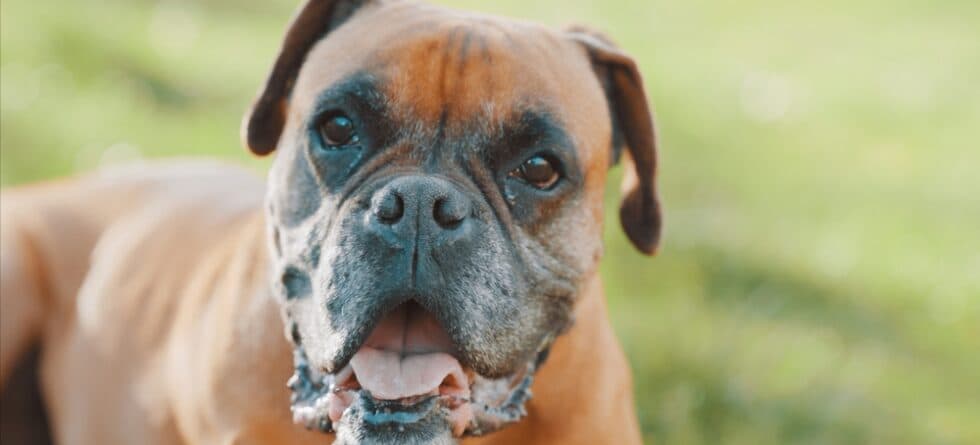
Boxers are high-energy, people-focused dogs. Calming them down is less about stopping energy and more about giving it the right outlets, then teaching an off switch. When their body and brain are satisfied, Boxers settle much more easily.
Meet their daily exercise needs first
A Boxer that has not burned energy will struggle to relax no matter how much training you do.
- Adults – aim for 60 to 90 minutes of activity daily, split into two sessions.
- Good choices – brisk walks, fetch, tug with rules, hiking, or short runs in cool weather.
- Match intensity to heat – Boxers overheat easily, so use shorter sessions when it is warm.
Add mental work every day
Boxers are smart and get wound up from boredom. Brain work drains them faster than endless physical play.
- Short training – 5 to 10 minutes, 2 to 3 times a day.
- Food puzzles and snuffle mats – turn meals into calm focus.
- Scent games – hide treats or toys and let them search.
Teach a settling routine
Calmness is a behavior you can train like any other.
- Pick a settled spot – a bed or mat in a low-traffic area.
- Reward calm choices – drop a treat when your Boxer lies down quietly.
- Use a cue – say “settle” or “bed” as they relax, then reward.
- Build duration – reward longer calm periods over time.
Keep play structured so it does not spiral
Boxers love rough play, but unstructured hype can make them harder to calm.
- Start with rules – sit or wait before play begins.
- Use short bursts – 10 to 15 minutes, then a break.
- End before they lose control – stop while they are still listening.
- Transition to calm – give a chew or lick mat after play.
Lower overstimulation in the home
Some Boxers stay revved up because their environment never gives them a downshift.
- Provide a quiet retreat space.
- Limit constant visitors or chaotic play when they are already excited.
- Use a calm background sound if outside noise triggers barking.
- Stick to predictable walk, meal, and rest times.
Use calming tools the right way
These help your Boxer self-soothe, especially after exercise.
- Long-lasting chews – chewing releases tension.
- Lick mats – licking lowers arousal and slows breathing.
- Crate or pen downtime – a safe off switch when introduced positively.
Avoid common mistakes
- Do not reward chaos – wait for a calm moment before giving attention.
- Do not yell – it often adds fuel to excitement.
- Do not rely on nonstop play – it builds stamina without teaching calm.
- Do not skip recovery time – Boxers need quiet time after activity to come down.
When to consider health or anxiety
If your Boxer cannot settle even after exercise and training, check for deeper issues.
- Sudden hyperactivity in an older dog.
- Pacing, drooling, or panic-like behavior.
- Restlessness paired with limping or stiffness.
In those cases, a vet visit or trainer plan can help rule out pain or anxiety.
To calm down a Boxer, give daily exercise, add brain work, and train a clear settling habit. Keep play structured, lower overstimulation, and reward calm behavior consistently. Boxers relax best when they feel satisfied, included, and guided into downtime.