
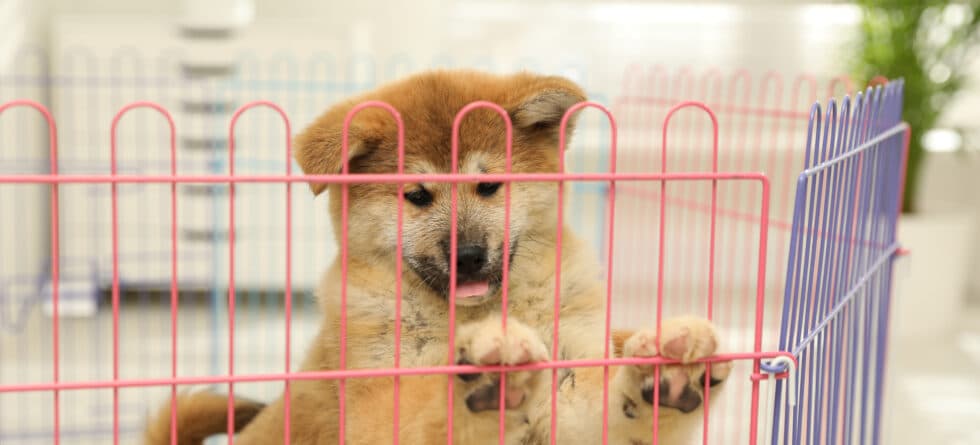
Where breeders house their puppies can vary depending on the breeder’s approach, resources, and commitment to animal welfare. Responsible breeders tend to follow specific guidelines to ensure that puppies are raised in a safe, clean, and stimulating environment.
Here’s a breakdown of where puppies might be housed…
In the Home (Indoor Living)
- Ideal for Socialization – Many reputable breeders raise their puppies inside their homes, where they can interact regularly with the family and other pets. This setup allows for early socialization with different people, environments, and everyday noises.
- Controlled Environment – Living indoors helps protect puppies from the elements and predators. It also ensures that they are kept clean and receive necessary care in a controlled environment.
Separate Puppy Room or Nursery
- Clean and Safe – Some breeders designate a specific room in the house for the puppies. This “puppy room” is typically separate from adult dogs but allows for regular interaction with family members.
- Socialization Focus – These rooms are often designed to be puppy-safe, with comfortable bedding, appropriate temperatures, and enough space for the puppies to move around and explore.
Outdoor Kennels or Cottages (with Proper Conditions)
- Not Ideal for All Breeders – While some breeders may have outdoor spaces for puppies, these areas should be secure, clean, and sheltered to protect the puppies from extreme weather, parasites, and accidents. Responsible breeders should ensure that the outdoor area is safe and that the puppies still receive regular human interaction and care.
- Exercise and Play – Some breeders with larger properties may have outdoor enclosures where puppies can play and exercise during the day. They should be brought indoors at night and for regular socialization.
Puppy Mills (Avoid These!)
- Poor Conditions – Puppy mills are mass breeding facilities where puppies are often housed in cramped, unsanitary conditions with little attention to their well-being. Puppies in these facilities may lack proper socialization, vet care, or adequate living space.
- High Red Flags – Avoid breeders who seem to have many litters available at once or refuse to show you where their puppies are raised. If the living conditions are poor or the puppies seem unhealthy, it’s a serious red flag.
Whelping Boxes (for Newborns)
- Safe Birth Space – For newborn puppies, breeders use whelping boxes — specially designed spaces where the mother can give birth and nurse her puppies. These boxes are typically located in a quiet, clean part of the home or kennel, offering the mother a safe and calm environment to care for her litter.
- Clean and Comfortable – Whelping boxes should be regularly cleaned to maintain hygiene and reduce the risk of infection or other health issues for the puppies.
Breeding Facility or Kennel (For Larger Operations)
- Regulated Kennels – Larger, regulated breeding operations may house puppies in dedicated facilities or kennels. These facilities should be designed with the puppies’ welfare in mind, including proper ventilation, temperature control, and safe play areas. Puppies raised in such environments should still be socialized and allowed ample time for human interaction.
- Proper Licensing – If a breeder operates out of a facility, they should be licensed, inspected, and compliant with local animal welfare regulations.
Key Factors for Responsible Housing
- Cleanliness – The living space should be regularly cleaned to maintain hygiene and prevent disease.
- Space – Puppies should have enough room to move around, play, and develop motor skills.
- Socialization – They need regular human interaction, as well as exposure to various sounds, environments, and other animals to develop into well-adjusted dogs.
- Safety – The area should be secure, with no risks of escape or injury.
Responsible breeders typically house puppies indoors or in a specially designated puppy room, providing a clean, safe, and interactive environment for socialization. Some may use outdoor kennels for playtime but ensure puppies receive ample care and attention. Avoid breeders who house puppies in poor conditions or refuse to let you visit the living space, as these could be signs of unethical breeding practices.