
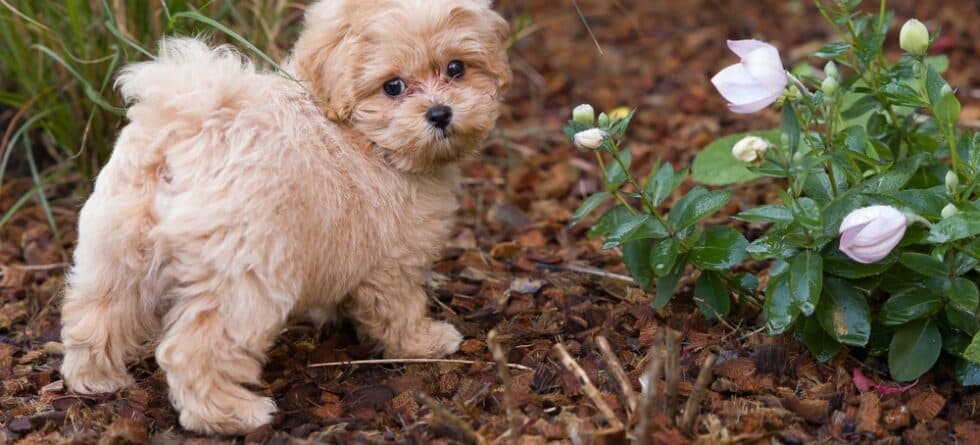
Poodles often have watery eyes because their facial structure, coat type, and common health tendencies make tears collect or drain poorly. Sometimes, tearing is harmless, but heavy tearing can also signal irritation or a medical issue. The key is noticing what else is happening along with the tearing.
Normal reasons Poodles tear up
Hair rubbing the eyes
Poodles have curly facial hair that grows continuously. If hair near the eyes is not trimmed, it can poke or sweep the eye surface, triggering extra tearing.
- Tears increase as the eye tries to wash away the irritation.
- You may see more tearing after grooming gaps.
Small tear ducts, especially in Toy and Mini sizes
Smaller Poodles can have narrower tear ducts. Tears may not drain fast enough, so they spill over onto the face.
- This often causes tear stains under the eyes.
- Tearing may be steady but not painful.
Allergies
Poodles are prone to environmental allergies. Pollen, dust, grass, and household cleaners can irritate the eyes and increase tearing.
- Often seasonal or worse after outdoor time.
- It may come with itching, paw licking, or sneezing.
Common problem causes
Eye irritation or a scratch
Anything that touches the eye surface can cause strong tearing.
- Dust, sand, shampoo residue, or a stray hair.
- Tearing is usually sudden and heavier on one side.
Blocked tear ducts
If ducts are clogged, tears cannot drain and overflow constantly.
- Often shows as nonstop wetness and staining.
- Can be mild or persistent.
Conjunctivitis
Inflammation or infection of the eye lining can make the eyes watery and uncomfortable.
- You may see redness, swelling, or discharge.
Dry eye with reflex tearing
It sounds backward, but if the eye is too dry, it can overproduce watery tears as a reflex. These tears do not lubricate well, so the cycle continues.
- Often paired with thick or stringy discharge.
- Eyes may look dull or irritated.
Eyelid or eyelash issues
Some Poodles have lashes that grow inward or eyelids that roll slightly, letting hair scrape the eye.
- Causes chronic tearing and irritation.
- It can worsen as the dog ages.
What you can do at home
- Keep facial hair trimmed – especially the inner corners and under-eye area.
- Wipe daily – use a soft, damp cloth to clear tears before staining sets in.
- Rinse after baths – avoid shampoo getting near eyes, and rinse the face well.
- Notice patterns – if tearing flares after walks or certain seasons, allergies may be involved.
Avoid using human eye drops unless your vet approves them. Some products can worsen irritation.
When to see a vet
Watery eyes should be checked if you see any sign of pain or infection.
- Tearing suddenly gets heavy, especially in one eye.
- Redness, swelling, or cloudy appearance.
- Yellow, green, or thick discharge.
- Squinting, blinking a lot, or rubbing the face.
- Tearing plus a bad odor or skin soreness under the eyes.
These can point to scratches, infection, glaucoma, or other issues that need quick care.
Poodles’ eyes water a lot most often because facial hair irritates the eyes, the tear ducts are small or slow to drain, or allergies cause inflammation. If tearing is mild and your dog seems comfortable, grooming and daily wiping usually help. If tearing is heavy, one-sided, or paired with redness or squinting, a vet visit is the safest next step.