
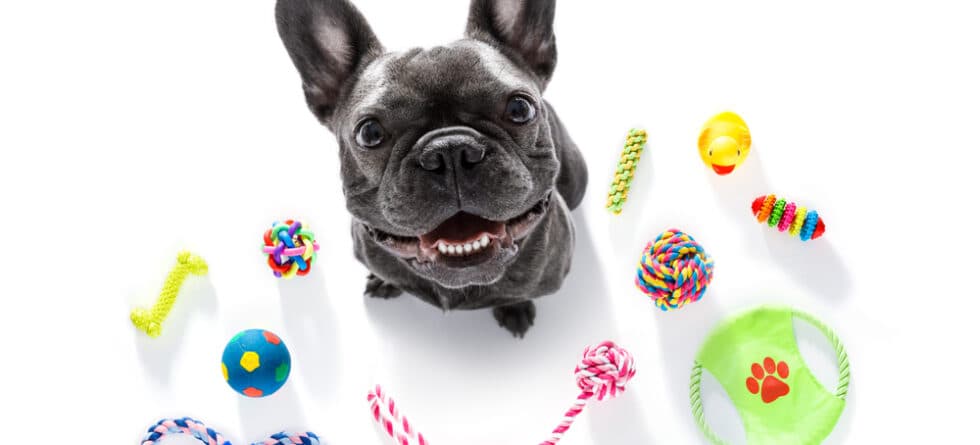
Many dogs get along great with French Bulldogs. Still, some dogs react negatively to Frenchies, and the reasons usually come down to communication style, body language, and past experiences. French Bulldogs have a look and way of moving that can confuse other dogs, especially ones that are cautious or poorly socialized.
Frenchies have faces that are hard for dogs to “read”
Dogs rely on facial signals to understand each other. French Bulldogs have flat faces, short muzzles, and big, round eyes. Those features can make their expressions look intense or unfamiliar to other dogs.
- Their short muzzle hides subtle calming signals like lip movements
- Wide eyes can look like staring, which some dogs see as rude
- Wrinkles and facial shape can make them seem tense even when relaxed
So a dog might think a Frenchie is challenging them, even when the Frenchie is just standing there.
Their breathing & snorting can sound threatening
French Bulldogs are brachycephalic, meaning they often snort, wheeze, grunt, or breathe loudly. To dogs that are sensitive to sound, these noises can feel like growling or agitation.
- Snorting during greetings can be misread as a warning
- Heavy breathing during play can raise tension
- Some dogs back off because the sounds feel unpredictable
Frenchies move differently
Because of their compact build, short legs, and heavy front end, Frenchies often have a stiff, bouncy, or bulldozer-like gait. Some dogs interpret stiff movement as confidence or pushiness.
- A stiff approach can look confrontational
- Their quick bursts of zoomies can feel overwhelming
- They may bump into dogs without meaning to
This can trigger annoyance or defensiveness in dogs that prefer calmer greetings.
Some Frenchies have rough or rude play habits
Many French Bulldogs love physical play like wrestling and body-slamming. That style is fun for some dogs, but not for all.
- They often play with their whole body, not just chasing
- They can be mouthy or grabby when excited
- They sometimes ignore gentle “stop” signals
If a Frenchie plays too hard, another dog may decide they do not like being around them.
Size & energy mismatches create tension
French Bulldogs are medium-small but very sturdy. Their confidence can clash with dogs that are much bigger or much more fragile.
- Larger dogs may get annoyed by their fearless attitude
- Small, timid dogs may feel bullied by their pushy friendliness
- High-energy dogs may find Frenchies too slow or easily overstimulated
Mismatch doesn’t mean hatred, just poor compatibility in play style.
Past experiences shape reactions
If a dog once had a bad interaction with a bulldog-type dog, they may generalize that fear to all Frenchies.
- Dogs remember scary encounters strongly
- They may associate flat faces or snorting sounds with trouble
- Rescue dogs with limited social history are especially likely to generalize
How to help your Frenchie make friends
You can reduce negative reactions by setting your Frenchie up for calmer, clearer introductions.
- Start greetings on leash at a distance, then move closer slowly
- Let the dogs sniff briefly, then walk side by side to lower pressure
- Interrupt play early if your Frenchie gets too rough
- Reward calm behavior and polite pauses
- Choose playmates with a similar size and play style
Good matches and polite introductions solve most issues quickly.
When to be cautious
If another dog is stiff, growling, or repeatedly snapping at your Frenchie, step away. Forcing dogs to “work it out” can lead to fights, and Frenchies are not built for endurance or heat-heavy scuffles.
Dogs that seem to dislike French Bulldogs are usually reacting to a misunderstanding, not true hatred. Frenchie’s facial structure, noisy breathing, stiff movement, and rough play style can confuse or irritate other dogs. With careful introductions and well-matched playmates, most Frenchies can build friendly, positive relationships with other dogs.